The 724-page independent analysis of the January 2025 fires offers an extensive roadmap for change. The harder questions now are which recommendations should be implemented, who will pay for them, and whether Los Angeles can build a system that sustains progress over time.
The January 2025 Los Angeles wildfires did more than test firefighters. They tested communities, evacuation systems, water infrastructure, emergency management, public information, mitigation programs, construction, land use, technology, mutual aid and the ability of government and residents to act together under extraordinary conditions.
Now, a major independent analysis from UL Research Institutes’ Fire Safety Research Institute (FSRI) attempts to understand how those systems performed — and what should change before the next extreme event.
The Southern California Fires Incident Analysis Report, dated October 2, 2026, was conducted at the request of the Office of the Governor of California. The report builds on dispatch records, radio communications, geospatial analysis, operational data, site inspections, technical discussions and resident input. Its central conclusion is consequential: California’s wildfire challenge can no longer be treated solely as a vegetation, firefighting or emergency-response problem.
The Palisades and Eaton fires evolved into large-scale community conflagrations. FSRI concludes that their destruction resulted from multiple interconnected factors rather than any single decision, event or system failure. The speed, scale and complexity of the fires exceeded many assumptions underlying existing prevention, preparedness and response systems.
That means incremental improvements to individual programs, by themselves, will not be enough. The long-term challenge is to strengthen how the entire system performs together: landscapes, communities, infrastructure, preparedness, emergency operations and the built environment.
Recommendations, Not Mandates
It is important to understand what this report is — and what it is not.
FSRI is an independent research organization. Its findings and recommendations are not regulations, mandates or orders. FSRI does not have enforcement or regulatory authority over the State of California, the City or County of Los Angeles, fire departments, utilities or the other organizations discussed in the report.
The recommendations should instead be viewed as an extensive, evidence-informed roadmap: ideas for state and local government, fire agencies, emergency managers, utilities, researchers and communities to evaluate as they determine what changes are appropriate, achievable and effective.
Some recommendations could be implemented administratively. Others could require legislation, changes in regulation, new research, interagency agreements, infrastructure investment or years of sustained work. And some deserve additional analysis and public discussion before determining whether or how they should be implemented.
There is also an unavoidable practical question: Who will pay for all of this?
Expanding staffing, improving water infrastructure, developing technology, conducting research, increasing training, strengthening emergency communications, supporting vulnerable populations, hardening homes and building community-scale mitigation programs all require money. In some cases, implementation could require substantial and sustained investment.
The report can identify what researchers believe should change, but it cannot appropriate funding. State and local governments will have to determine which recommendations to pursue, what they will cost, where they fit among competing priorities, and whether funding should come from existing departmental budgets, new appropriations, grants, state or federal programs, utilities, private investment, philanthropy — or some combination of those sources.
Funding therefore has to be part of the accountability discussion. It is relatively easy to agree that a capability should be improved. It is much harder to identify the recurring funding, personnel and institutional support necessary to maintain that capability five or ten years from now.

From Parcel Compliance to Community Survival
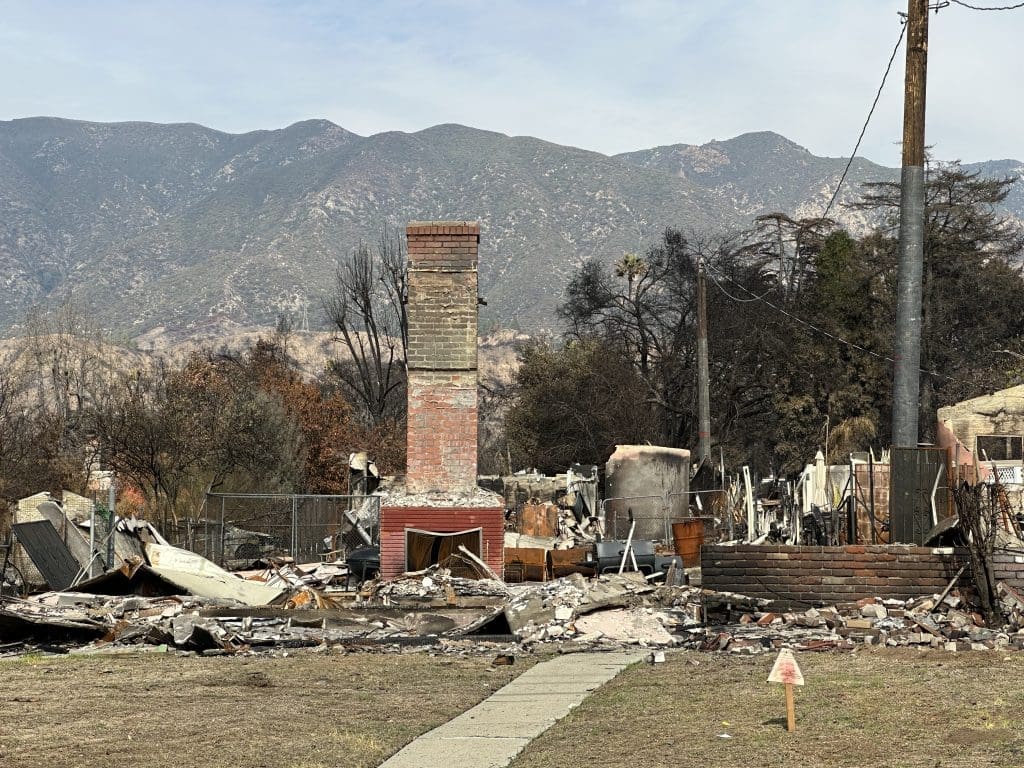
One of the report’s most important themes is that wildfire mitigation cannot stop at the property line. Finding 5 notes that current defensible-space regulations are primarily parcel-level, while wildfire risk increasingly reflects fuel continuity across multiple parcels and interconnected built environments. Ornamental vegetation, vehicles, fencing, accessory structures, adjacent buildings and other fuels can create pathways for fire to move through a neighborhood.
Recommendation 5.2 calls for community-scale mitigation planning that extends beyond individual parcels. Recommendation 12.1 goes further, calling on agencies to supplement compliance-based programs with performance-based measures tied to actual wildfire outcomes — including fuel continuity, structure-to-structure spread, home hardening and post-fire loss patterns.
The objective, therefore, cannot simply be a compliant parcel. It must increasingly be a survivable community.
That distinction between activity and outcome could prove transformational. Inspections completed, acres treated and outreach events conducted are useful measures of work. They do not, by themselves, tell us whether a neighborhood is becoming more likely to survive the next major wildfire.
Home Hardening and Defensible Space Must Work Together
The report also reinforces an issue that is sometimes lost in debates over defensible space: vegetation management is only one part of structure survivability.
Finding 18 says post-fire observations showed ember exposure, structure vulnerability and structure-to-structure spread were major drivers of loss, while home-hardening adoption lagged behind vegetation and preparedness efforts. Recommendation 18.1 calls for increased emphasis on home hardening, retrofit assistance, ignition-resistant construction and structure survivability, integrated with defensible space and vegetation management.
For Southern California, that integrated approach is especially important. Zone 0 and other defensible-space strategies can reduce risk, but they should be considered alongside roofs, vents, windows, decks, fences, exterior materials and the many other ways a structure can ignite.
Better Science for the Fire We Are Actually Fighting
The report identifies another uncomfortable problem: some of the models used to anticipate wildfire behavior did not reproduce what actually happened.
Finding 118 states that current models were unable to capture the rate and distance of fire spread observed during the Palisades and Eaton fires. Recommendation 118.1 calls for improvements to underlying data, fire-spread models and/or weather models so forecasts can better predict lateral flame spread, particularly when fire encounters structures and the built environment.
That matters because communities cannot plan effectively for a hazard that their analytical tools systematically understate or fail to represent. The built environment itself can become part of the fuel complex during a community conflagration.
FSRI also calls for more research into suppression itself. Finding 99 says extreme wind-driven fire behavior, receptive fuels, limited resources and equipment configurations not optimized for the conditions overwhelmed conventional wildland-urban interface tactics. Recommendation 99.1 calls for research into evidence-based WUI tactics, vehicle types and suppression equipment designed to prevent wildfires from becoming community conflagrations.
Water Systems Are Part of Wildfire Resilience
Water infrastructure is another area where the report challenges conventional assumptions.
Recommendation 25.2 calls for drinking-water system design standards to be reviewed and updated to account for extreme water-usage events. Recommendation 25.3 similarly calls for utilities to perform hydraulic analysis of storage and distribution systems under those conditions.
The policy question is not simply whether a water system met existing standards. It is whether those standards adequately contemplate the demands created when a wind-driven wildfire becomes a community conflagration. Changing that standard could have major engineering and financial implications — which brings the conversation back to cost, priorities and who ultimately pays for greater resilience.
Watch Duty — and the New Reality of Emergency Information
The report also recognizes something residents experienced firsthand: official government systems are no longer the only place people receive emergency information.
Finding 123 says third-party platforms such as Watch Duty played an important role in real-time situational awareness by aggregating and distributing information from authoritative sources. Recommendation 123.2 suggests formal information-sharing protocols with trusted third-party providers so validated information can move quickly while maintaining accuracy and consistency. Finding 124 notes that Watch Duty often relayed fire behavior, evacuation information and other updates more rapidly than official notification systems.
For residents, the lesson is not to choose between government and third-party information. It is to build a stronger information ecosystem. Watch Duty can supplement — not replace — official emergency alerts and evacuation instructions. MySafe:LA is currently conducting training workshops that teach residents how to implement an information network comprised of multiple applications.

The Human Infrastructure May Be Just as Important
Technology is only part of resilience. There is another form of infrastructure that cannot be installed with concrete, steel or fiber optics: social capital.
The report found that residents who shared information through texts and group chats often felt more informed, were more likely to have a plan to stay or leave, and could identify neighbors who might need evacuation assistance. Recommendation 125.1 encourages agencies to promote close-knit neighborhood communication networks. Recommendation 136.2 similarly calls for stronger neighborhood communication and preparedness groups.
That is a significant finding. Neighbors who know one another, share information and understand who may need help can become part of the resilience system before professional responders ever arrive.
Older Adults and Vulnerable Residents Cannot Be an Afterthought
The human consequences of evacuation failure are particularly visible in the report’s findings involving older adults and people who may not be able to evacuate independently.
Finding 137 notes that a large portion of those who died in both fires were older adults found inside homes. Finding 138 concludes that early evacuation planning did not adequately account for vulnerable populations and critical facilities, reducing situational awareness and affecting prioritization and coordination.
Recommendation 138.1 calls for mapping and real-time tracking of vulnerable populations and essential facilities as part of pre-incident and early operational planning. This is not simply an evacuation issue. It is a planning, communications, transportation, healthcare and neighborhood-resilience issue.
Los Angeles Has Not Been Standing Still
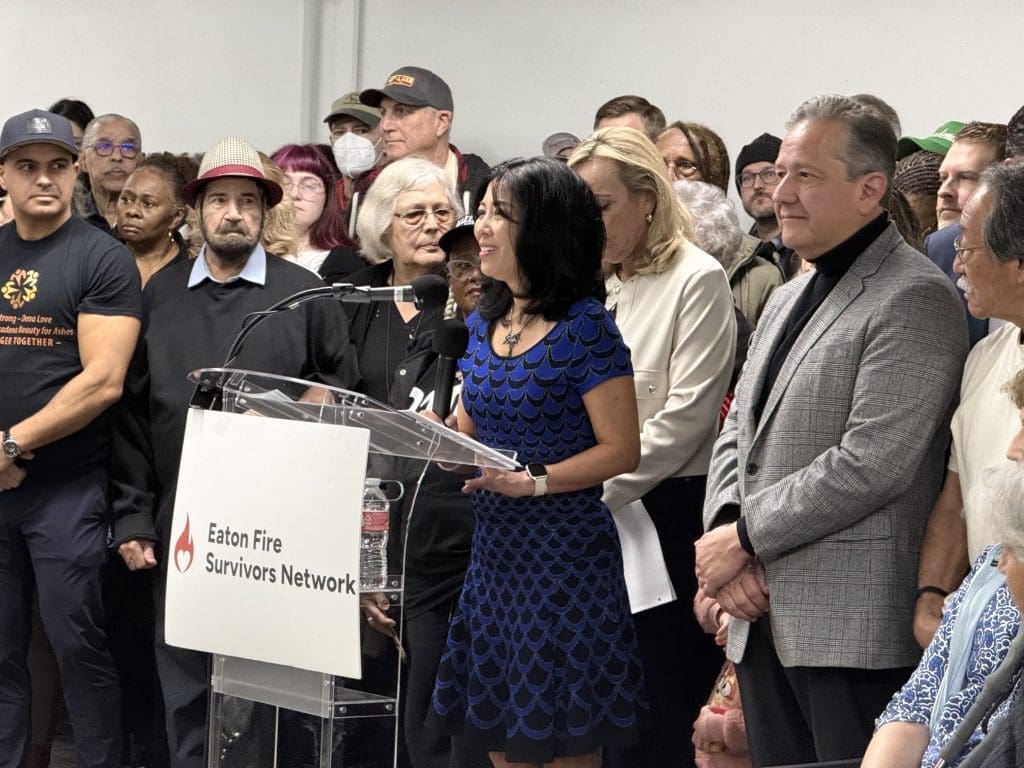
There is an important limitation readers should keep in mind when considering the report: the analysis necessarily looks backward, principally at conditions before and during the January 2025 fires. It is not a comprehensive accounting of everything the City and County of Los Angeles have done since those fires.
That distinction matters because considerable work has already occurred.
The Los Angeles City Fire Department, for example, has continued improving its technology and situational-awareness capabilities, both at Metro Fire Communications — the Department’s dispatch and communications center — and among fire companies and other resources operating in the field.
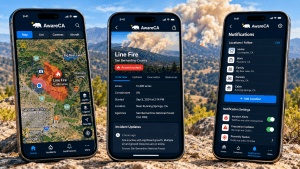
The City is also actively using a broader set of tools to support wildfire intelligence, public information and evacuation readiness, including Genasys Protect, AwareCA, Watch Duty and other software and information systems.
This is an important point of fairness. An after-action analysis should identify weaknesses and opportunities without creating the impression that agencies have been waiting for the final report before making improvements. Fire departments, emergency-management organizations, elected officials, utilities, nonprofit partners and communities throughout the region have spent the period since January 2025 examining what happened and working to improve readiness.
There is still considerable work ahead. But the starting point in October 2026 is not the same as the starting point on January 7, 2025.
MySafe:LA, LAFD and the Reality of Public-Private Partnership
For MySafe:LA, one section of the report is particularly significant.
MySafe:LA, a division of the nonprofit Safe Community Project, has worked with the Los Angeles Fire Department for nearly two decades. Over that period, the relationship has evolved well beyond occasional public outreach.
MySafe:LA actively helps fill gaps where the Department does not have sufficient staffing, resources or dedicated budget to provide the desired level of community-facing service. That work includes wildfire preparedness and resilience, public education, community engagement, home assessments and other prevention and Community Risk Reduction activities.
Finding 17 recognizes that LAFD’s partnership with MySafe:LA and other nonprofits expanded wildfire preparedness and outreach. It also identifies an important weakness in the model: many services have depended on outside funding and organizational capacity, creating risks to continuity, coverage, staffing stability and long-term sustainability.
Importantly, the report does not recommend ending those partnerships. Recommendation 17.1 says partnerships with organizations such as MySafe:LA should continue and be encouraged, while also recommending greater LAFD abilities related to core wildfire preparedness, public education, Fire Adapted Communities initiatives, Firewise USA support, home assessment and outreach through dedicated staffing, stable funding, formal objectives and performance measures. The LAFD and MySafe:LA are engaged in a public/private partnership, called the Los Angeles Wildfire Resilience Alliance to address these issues.
There is an important reality behind that recommendation: MySafe:LA itself is not yet funded at the capacity necessary to meet the scale of Los Angeles’ long-term wildfire recovery and resilience needs.
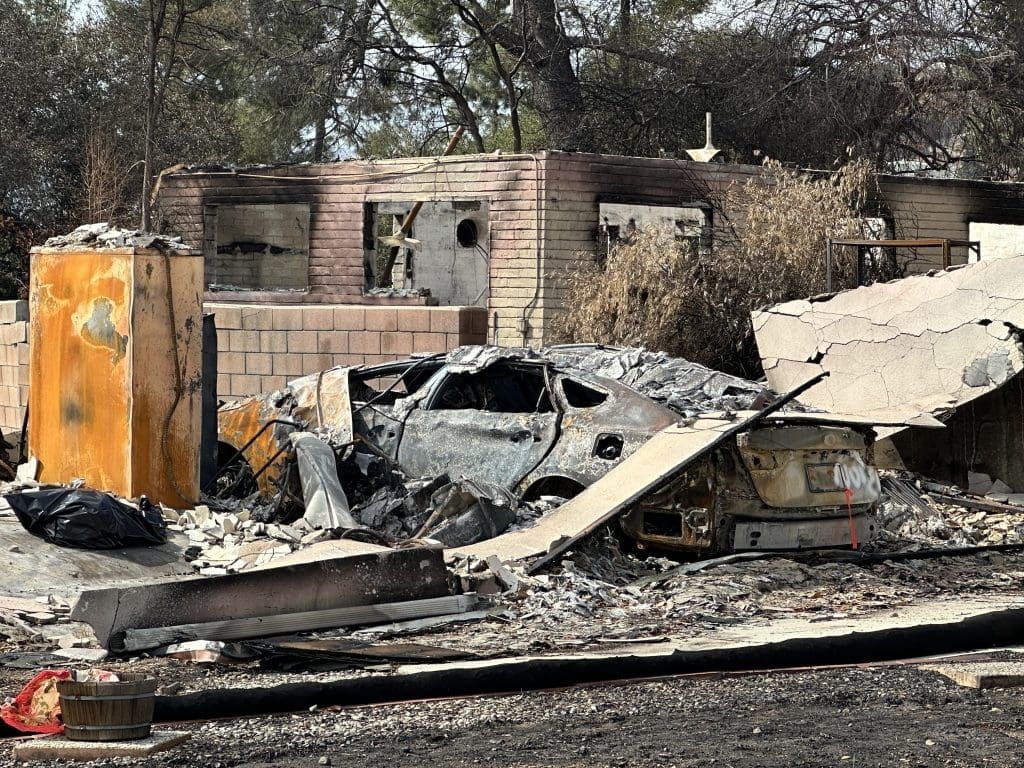
The Palisades and Eaton fires created needs that will continue for years: recovery education, rebuilding guidance, home hardening, defensible-space assistance, evacuation readiness, Firewise and Fire Safe Council development, Community Wildfire Protection Planning, neighborhood organization and sustained public education. Those needs do not disappear when an emergency appropriation or grant period ends.
If nonprofit and community organizations are expected to become an important part of California’s wildfire resilience system, the discussion cannot simply be about using partnerships. It must also be about sustaining them.
This is not an argument that a nonprofit should replace the Los Angeles Fire Department. It should not. It is an argument for a modern model in which government maintains responsibility for essential public-safety functions while capable nonprofit and community partners extend the reach of those functions — particularly where a fire department cannot reasonably provide every assessment, workshop, neighborhood meeting, preparedness program or resilience initiative itself.
The question is not whether government or nonprofits should do the work. The question is how the entire system can be structured, funded and sustained so the work actually gets done.
The Most Important Recommendation May Be No. 175
California does not lack after-action reports. The FSRI analysis reviewed historical reports and found recurring operational and organizational challenges. The problem is that identifying a lesson does not guarantee the lesson will be implemented.
Finding 175 identifies the absence of a formal mechanism to track recommendations across jurisdictions as a barrier to accountability and long-term implementation. Recommendation 175.1 calls for a centralized corrective-action process that assigns ownership, monitors implementation, measures progress and validates improvements through reporting, training and exercises.
That may be among the most consequential recommendations in the entire report. Because without implementation, even the best after-action report eventually becomes shelf-candy.
The harder sequence is not disaster, investigation, recommendations. It is recommendations, priorities, funding, ownership, implementation and measurement. Ownership without resources is not implementation.
The Report Is Not About Finding One Villain
The report’s systemic framing is important for another reason: it resists the temptation to explain a catastrophe of this scale through a single failure or a single institution.
FSRI says the destruction resulted from multiple interconnected factors. That does not eliminate accountability. It broadens it. Fire agencies, emergency managers, utilities, policymakers, researchers, technology providers, nonprofit organizations, community leaders and individual residents all occupy different parts of the resilience system.
The opportunity now is to determine where changes will produce meaningful risk reduction — and then make certain the people and organizations expected to carry out those changes have the authority, staffing, funding and sustained support necessary to succeed.
Continuing the Conversation on REBUILD:LA
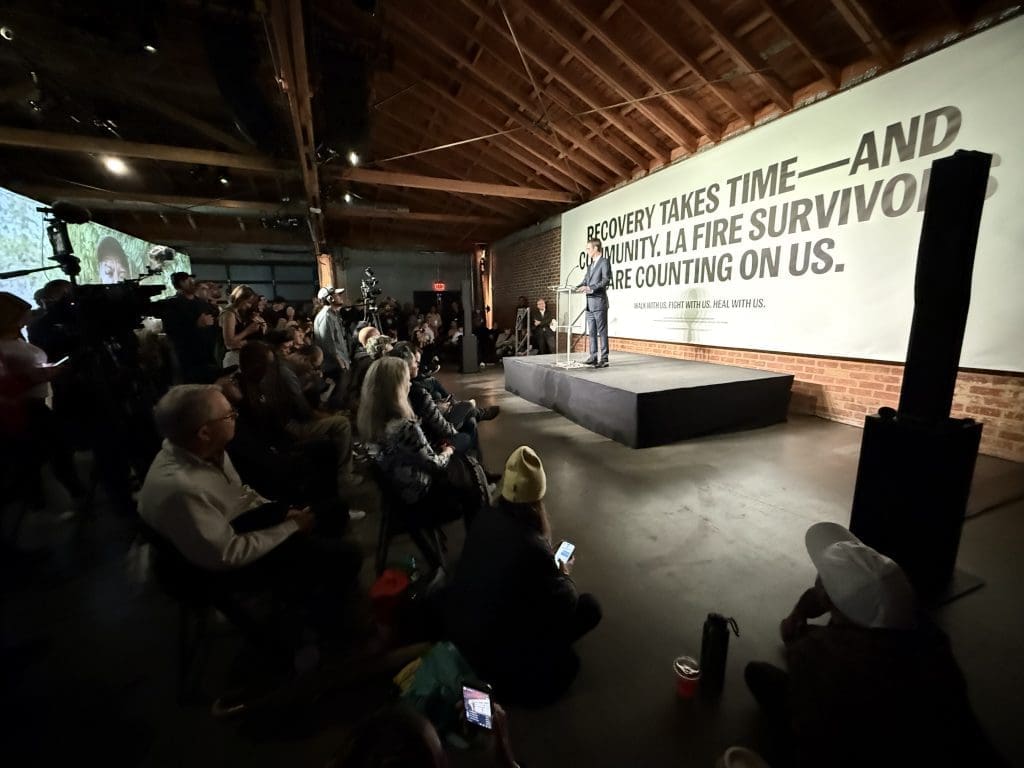
A report of this size cannot be adequately explained in a single news article. MySafe:LA will continue examining the findings and recommendations, along with the work already underway to improve wildfire resilience throughout Los Angeles.
Readers can also follow REBUILD:LA, MySafe:LA and the Safe Community Project’s award-winning podcast, for continuing coverage of the report, wildfire recovery and the public, private and community initiatives shaping a more resilient Los Angeles. REBUILD:LA has received the 2025 Communicator Award of Excellence, the 2025 Silver W3 Award and the 2026 Silver NYX Award for podcasting.
The objective should not be to use this report to relitigate January 2025 indefinitely. It should be to understand what happened, identify what has already improved, determine what still needs to change, decide which recommendations are worth pursuing — and then translate those choices into measurable action.
A Blueprint — If We Choose to Use It
FSRI’s overarching message is that no single intervention can eliminate wildfire risk. Future success depends on strengthening the performance of the entire system and improving the connections among prevention, preparedness, infrastructure, evacuation, response, the built environment and community resilience.
The lessons extend well beyond Los Angeles and California. Communities across the country are confronting the possibility that a wildfire can move from wildland vegetation into densely developed neighborhoods and become something traditional response systems were not designed to manage at that scale.
The January 2025 fires demonstrated what can happen when an extreme event outruns assumptions developed for a different era. This report gives California an opportunity to build something better.
The next test is not whether we read it.
It is what we choose to do with what we have learned.