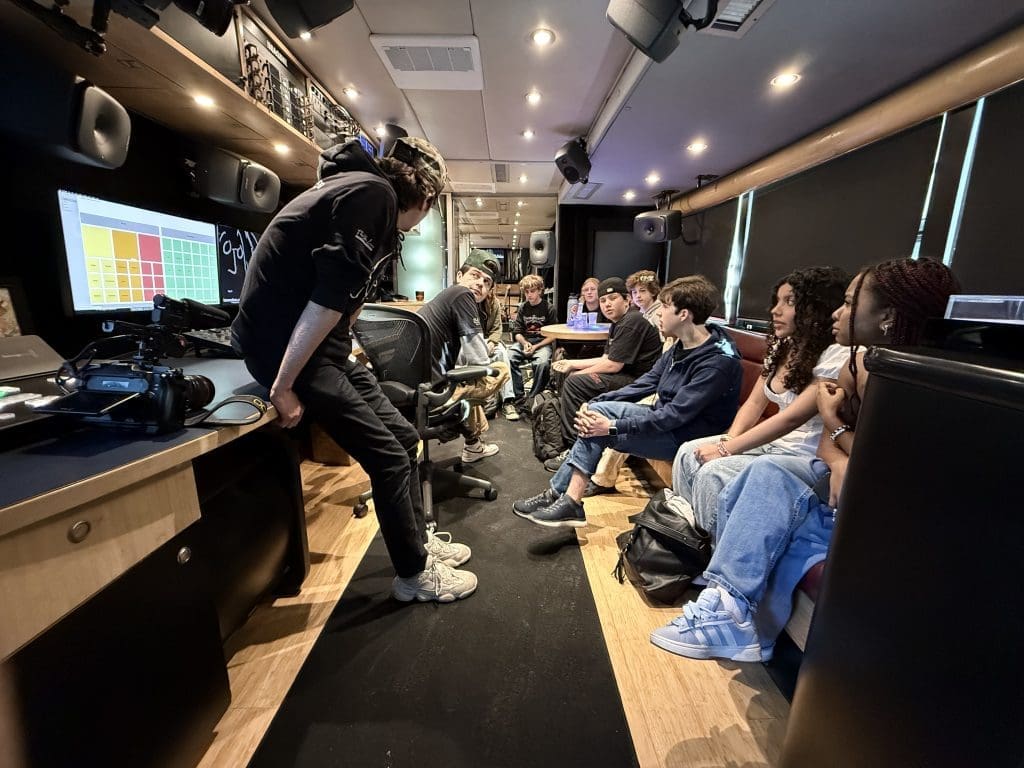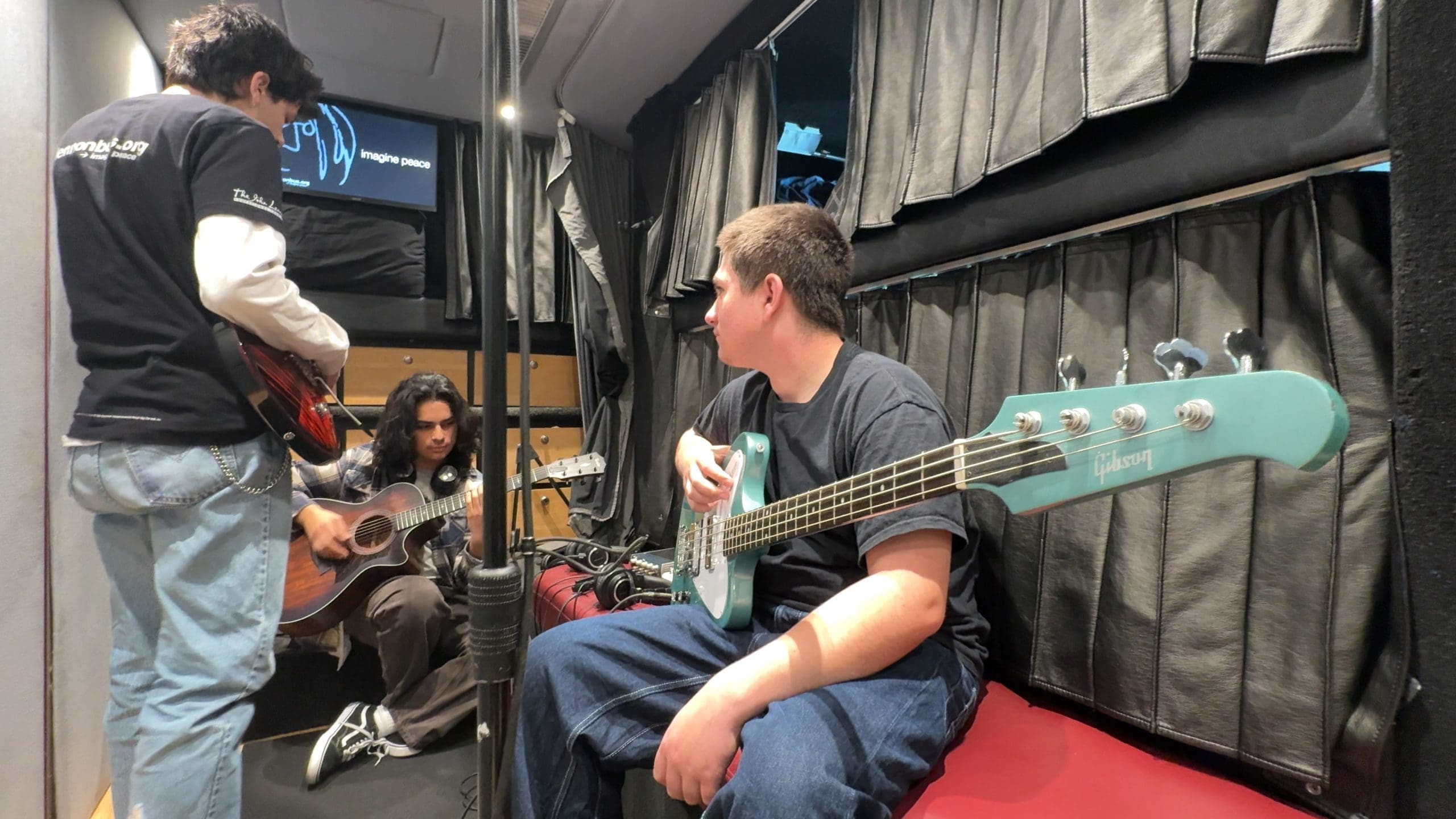
For three extraordinary days in early February, music became a bridge between loss and healing for students impacted by the January 2025 wildfires. From February 3–5, MySafe:LA partnered with the John Lennon Educational Tour Bus to bring students from fire-affected communities together to create original music rooted in recovery, resilience, and hope.
The result: three original songs, three music videos, and hundreds of inspired students and educators—all in just one unforgettable week.
Three Days, Three Schools, One Shared Purpose
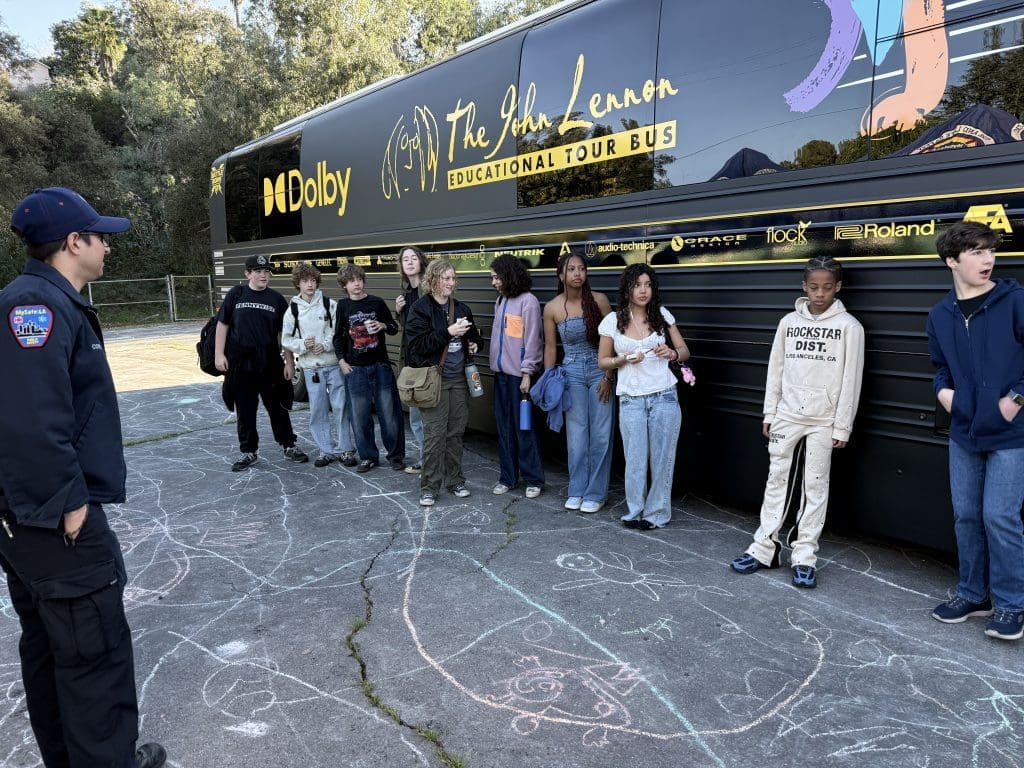
Each day, the Lennon Bus transformed a school campus into a mobile creative studio, welcoming 12 students per day from multiple schools, each bringing their own musical background, lived experience, and perspective.
- February 3: Odyssey Charter School, Altadena
- February 4: Blair High School, Pasadena
- February 5: Palisades Charter High School, Pacific Palisades
Students represented a wide spectrum of musical experience. Some were novice musicians, picking up instruments or songwriting concepts for the first time. Others were highly skilled performers, composers, or producers. What united them was a shared experience: living through a wildfire that disrupted their homes, schools, friendships, and sense of normalcy.
From Emotion to Expression
Each morning began not with instruments, but with conversation.
Students were invited to share how the fires affected them—what they lost, what they feared, what they missed, and what they hoped for. These discussions quickly became the emotional foundation for the day’s creative work. Musical themes emerged organically from these conversations, shaped by grief, anger, resilience, and optimism.
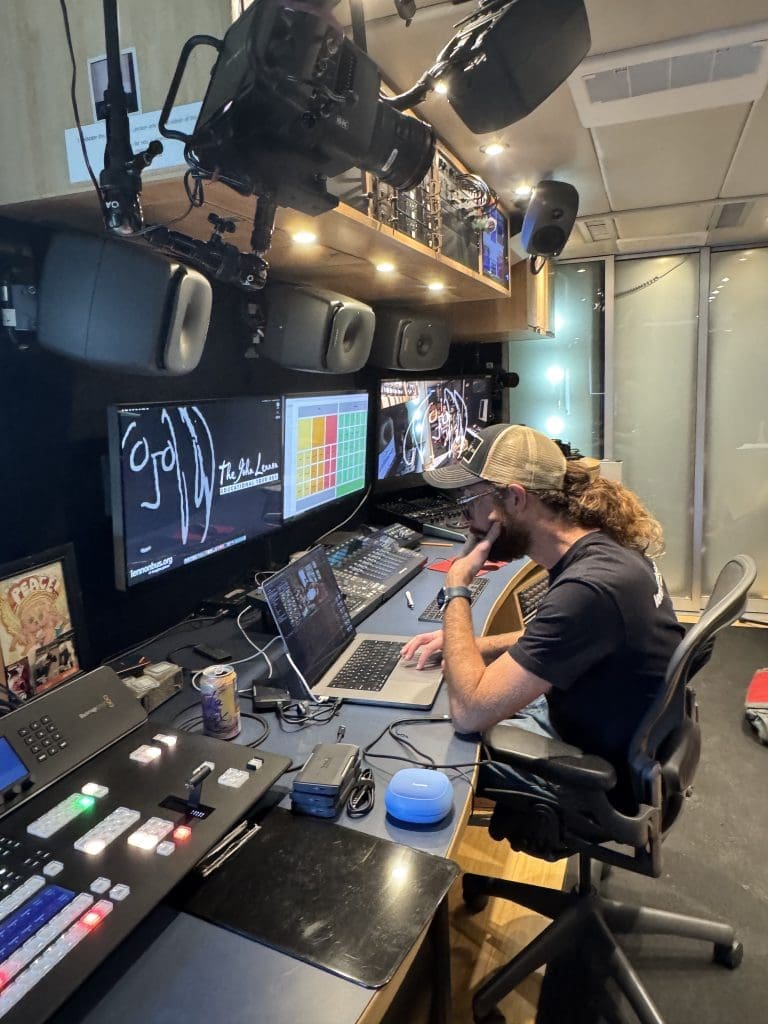
By mid-morning, ideas turned into lyrics. Lyrics turned into melodies. And by afternoon, those melodies were fully realized inside the Lennon Bus’s professional recording studio.
While each song was distinct in style, pace, and tone, all three reflected powerful, deeply personal responses to the fires:
- The loss of homes and neighborhoods
- The disruption of school communities
- The strain on friendships and families
- The determination to move forward together
A Ripple Effect Across Campuses
Although only 12 students could participate each day inside the bus, the impact extended far beyond those walls.
Teachers, administrators, and classmates followed the creative process closely, gathering nearby and eagerly awaiting updates. By the end of each day, excitement spread across entire campuses as word circulated about the songs, the videos, and the emotional honesty behind them.
Even before the music is officially released—scheduled for the coming week—students and educators alike are already calling the experience transformative.
“This wasn’t just about music,” one educator shared. “It gave students permission to talk about what they went through—and to turn that into something meaningful.”
A Model for Emotional Recovery
MySafe:LA’s involvement focused on creating a safe, supportive environment where students could process their experiences through creativity and connection. Throughout the week, MySafe:LA resilience specialists worked alongside Lennon Bus educators to ensure students felt supported—especially as emotions surfaced during songwriting and discussion.
Many students expressed feelings they had not yet fully shared elsewhere. For some, it was the first time they openly talked about displacement, fear, or loss related to the fires. For others, it was a moment to reclaim confidence and identity after months of disruption.
The emotional depth of the week has already prompted MySafe:LA to explore additional Lennon Bus dates in other fire-impacted communities.
What Comes Next
Each of the three songs will be released under a Creative Commons license, accompanied by a music video documenting the creative journey. The music will be shared at no cost, reinforcing the program’s core purpose: community healing, not commercialization.
As Los Angeles continues to recover from the January 2025 wildfires, this initiative stands as a reminder that recovery is not only about rebuilding structures—it’s also about restoring confidence, voice, and connection, especially for young people.
For three days in February, music helped do exactly that.
And for many students, it was just the beginning.